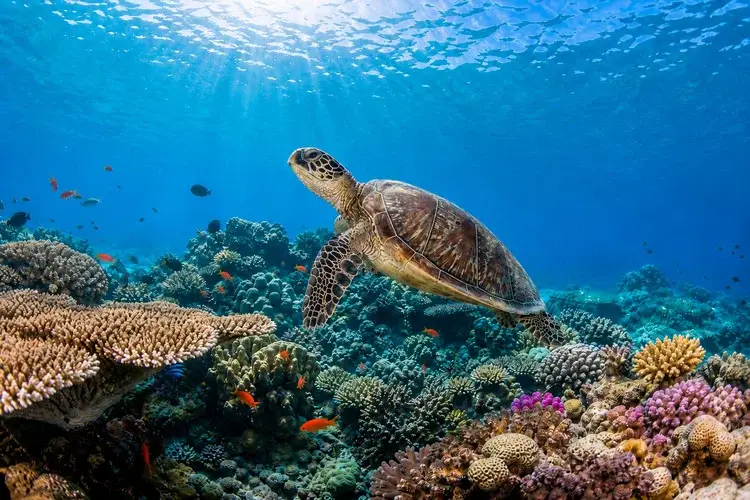
A marine ecosystem is a natural system made up of living organisms and the saltwater environment around them, from a coastal mangrove to the deepest trench. What defines it is salinity — around 35 parts per thousand on average — plus the physical conditions that shape life there: light, temperature, depth, dissolved oxygen and nutrients. Marine ecosystems cover more than 70% of the planet's surface and hold over 97% of its water.
In short
A marine ecosystem is a natural system made up of living organisms and the physical environment around them, in the ocean or along the coast. What makes marine ecosystems special is their ability to support an immense diversity of species thanks to their abundance of resources: think of them as cities, where the species are the inhabitants and the rock formations, coral reefs and sandy areas are the buildings.
There are four broad types. Coastal ecosystems, where water meets land, create mangroves, marshes and beaches that act as natural barriers against storms. Open water ecosystems are the backbone of the marine food chain, from tiny fish to whales. Deep-sea ecosystems host bioluminescent and extreme-adapted life in cold darkness. And coral reefs, the rainforests of the ocean, hold 25% of all marine species.
The living part matters just as much. Marine flora runs from phytoplankton, which produces up to 70% of the oxygen we breathe, to seaweeds and mangroves that filter pollutants and hold back erosion; the fauna runs from jellyfish to blue whales, each species with a role in the balance. Pollution, overfishing and climate change are leaving deep scars, and ocean acidification is damaging reefs, so reducing plastic, supporting sustainable fishing, learning about the ocean and joining beach cleanups all add up.
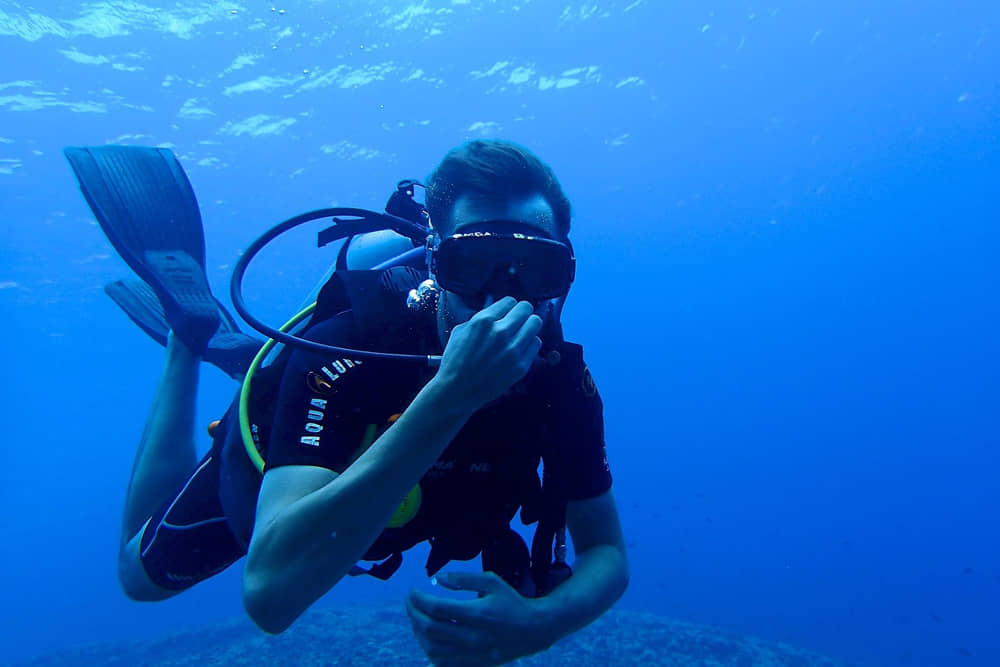
Think of them as cities. The species are the inhabitants, and the reefs, rock formations, sandy plains and kelp forests are the buildings they live and hunt in. As a diver you spend your time inside those cities, which is a good reason to understand how they work.
What makes an ecosystem marine
Every ecosystem is the sum of two things: the living community and the physical environment it depends on. In the ocean the living part runs from bacteria and plankton to whales; the physical part is saltwater, and the conditions that vary within it.
Those conditions are what create such different worlds inside the same ocean. Light reaches only the top layers. Temperature drops with depth and varies hugely with latitude. Pressure rises about one atmosphere every ten metres. Nutrients arrive from rivers, from upwelling currents and from what sinks down from above. Change any of those variables and you get a completely different community of species, even a few hundred metres away.
The scale is hard to picture until you see the numbers together.
- More than 70% of the Earth's surface is ocean.
- Over 97% of all the water on the planet is seawater.
- Around 90% of the habitable space on Earth, measured by volume, is marine.
- Roughly 240,000 marine species have been described so far, and the real figure is thought to be far higher.
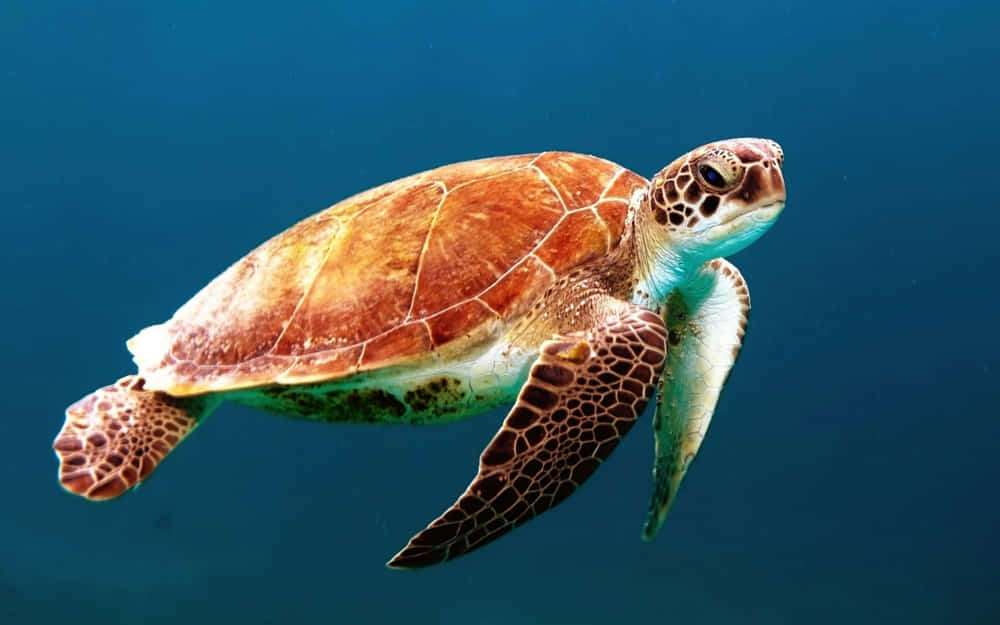
The main types of marine ecosystem
There is no single official list, but most classifications group them by where they sit and what physically defines them. These are the ones you are most likely to meet.
Coastal ecosystems: estuaries, salt marshes and mangroves
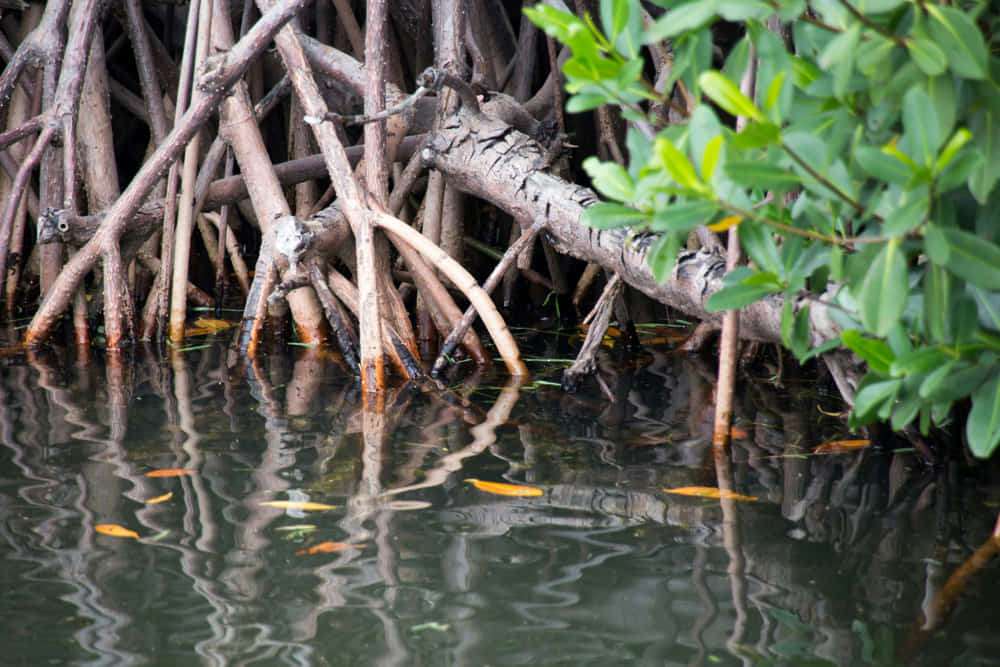
Where freshwater and land meet the sea, salinity swings with the tide and the seasons. Estuaries mix river and ocean water and act as nurseries for a huge number of commercial fish species. Salt marshes flood and drain with the tides. Mangroves, with their specialised root systems, trap sediment, filter pollutants, hold back erosion and act as natural storm barriers. They are also disappearing fastest: mangrove cover has fallen by more than a third since 1950.
Coral reefs
Built by the limestone skeletons of colonial polyps, reefs are the rainforests of the ocean: they occupy a tiny fraction of the seafloor and are estimated to host around a quarter of all marine species. They need warm, clear, shallow, nutrient-poor water, which is precisely why they are so sensitive — a few weeks of unusually warm water is enough to trigger bleaching, when corals expel the algae that feed and colour them.
Seagrass meadows and kelp forests
Usually left out of the summaries, and they should not be. Seagrasses are true flowering plants that form underwater meadows, shelter juvenile fish, stabilise sediment and lock away carbon at a remarkable rate — what is now called blue carbon. Kelp forests do the same job in cold, nutrient-rich water.
The open ocean
The big blue: water with no bottom in sight and nothing to hide behind. It is the backbone of the marine food chain, from phytoplankton through schooling fish to tuna, sharks and whales, and where the great migrations happen. Vast as it is, overfishing and plastic reach every part of it.
The deep sea
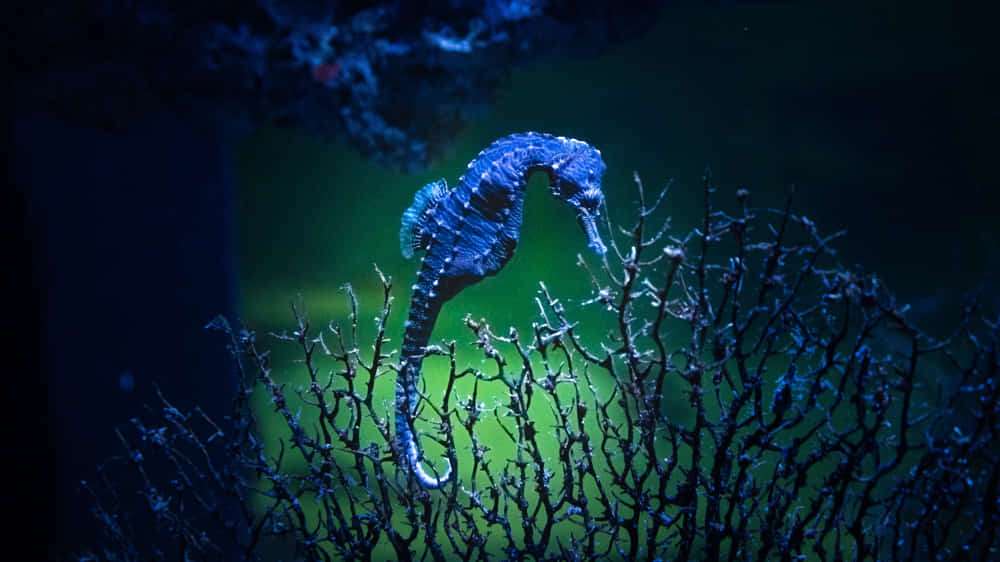
Cold, dark, under enormous pressure and still full of life. Bioluminescence replaces sunlight as a signalling system, and around hydrothermal vents whole communities live on chemosynthesis — food chains that do not depend on the sun at all.
How the ocean is layered
Two ways of slicing the ocean will make almost any description clearer. The first is by light:
- Euphotic zone, surface to about 200 m: enough light for regular photosynthesis. Almost all the ocean's primary production happens here, and so does virtually all recreational diving.
- Dysphotic zone, roughly 200 to 1,000 m: faint light, not enough to sustain photosynthesis. This is the twilight zone where much of the ocean's fish biomass spends the day.
- Aphotic zone, below about 1,000 m: no sunlight at all, down through the abyssal plains to the trenches.
Pelagic and benthic
The second division is simpler: pelagic means the water column itself, where things swim and drift, and benthic means the seafloor and the communities attached to or living in it. A coral reef is a benthic habitat; the barracuda hovering above it is pelagic. Most ecosystems are a conversation between the two.
Learn to dive with us
See these ecosystems for yourself
The SSI Open Water course takes three days and puts you on the reef with a small group. If you only want a first taste, a Try Scuba day is a single session in the water.
The flora: the green lung nobody sees
Marine plant life starts with phytoplankton, microscopic drifting organisms that carry out photosynthesis in the sunlit layer. Estimates of how much of the oxygen in our atmosphere they produce range from around half to as much as 70%, depending on how the calculation is done — either way, a large share of every breath you take was made at sea.
Above that scale sit macroalgae and kelp, and the true marine plants: seagrasses and mangroves. Between them they oxygenate the water, feed entire food chains, filter pollutants, and hold sediment in place. Protecting marine flora is not a side issue in ocean conservation; it is most of it.
The fauna and the roles they play
The diversity runs from jellyfish and copepods to the blue whale, the largest animal that has ever lived, and every size in between has a job.
Filter feeders like whale sharks and manta rays move nutrients around. Parrotfish keep algae from smothering corals and, in doing so, produce much of the sand on a tropical beach. Predators from groupers to sharks remove the weak and the sick. Cleaner wrasse run stations that reef fish queue up for. Remove any one of those roles and the balance shifts, usually within a season.
What marine ecosystems do for us
It is tempting to treat this as scenery. It is infrastructure.
They also regulate the climate directly. The ocean has absorbed more than 90% of the excess heat trapped by human activity over the last fifty years, and close to a quarter of the carbon dioxide we emit. That absorption is the reason surface temperatures have not risen faster — and also the reason the ocean itself is warming and acidifying.
- Food. The world's 66 Large Marine Ecosystems generate around 90% of the annual global marine fisheries biomass.
- Economy. Those same systems are estimated to contribute some three trillion dollars a year, and coastal fisheries linked to mangroves and reefs are worth at least 34 billion dollars annually on their own.
- Protection. Reefs, mangroves and marshes absorb wave energy and reduce storm damage to coastlines where nearly 40% of the world's population lives within 100 km of the sea.
- Oxygen and carbon. Phytoplankton, seagrass and mangroves produce oxygen and store carbon, in some cases faster per hectare than tropical forest.
What is damaging them
The pressures are well documented and they compound each other.
The result is measurable. Around 60% of the world's reefs face immediate or direct threat, mangroves have lost more than a third of their extent since 1950, and only about 13% of the ocean surface still qualifies as wilderness.
- Pollution. Roughly 80% of marine pollution originates on land: sewage, agricultural runoff, industrial discharge and plastic that breaks down into particles found from plankton to top predators.
- Overfishing. Stocks removed faster than they reproduce, plus bycatch and the loss of key predators.
- Warming. Higher water temperatures trigger coral bleaching and push species out of their historical ranges.
- Acidification. Dissolved CO₂ lowers the pH of seawater, making it harder for corals, molluscs and plankton to build calcium carbonate skeletons and shells.
- Habitat destruction. Coastal development, dredging, destructive fishing gear and anchor damage on reefs.
How to protect them, as a person and as a diver
None of this needs to end in paralysis. The actions that matter are unglamorous and they add up.
Divers carry an extra layer of responsibility, because we are physically in there. Good buoyancy is a conservation skill: a diver who touches nothing breaks nothing. Clipping your gauges, staying off the reef and not handling animals all cost nothing.
- Cut single-use plastic and choose reusable alternatives, especially anything that ends up on a beach.
- Support sustainable fishing by buying from certified and responsible sources.
- Learn and pass it on. Understanding the ocean is what makes people defend it.
- Join a beach or dive site cleanup. Small efforts, repeated, are what keeps a site healthy.
- Use reef-safe sunscreen and rinse off before entering the water.
See them for yourself
Reading about a reef and hovering over one are not the same experience. The SSI Open Water course takes three days and puts you on the reef in a small group, certified to dive anywhere in the world; if you only want a first taste, a single try dive is enough to see what is down there. All of it is listed on our beginner course page.
If the ecology side is what pulls you, our ecology diving programs go into marine life, reef health and conservation in more depth. And you can see these ecosystems in practice at our schools in Koh Tao, Gili Air and the rest of our sites across Indonesia and Thailand — reefs, walls, seagrass and open blue water, often on the same day.
Plan your dives
FAQ
Frequently asked questions
What is a marine ecosystem?
A natural system formed by living organisms and the physical environment they live in, located in the ocean or in coastal areas.
What types of marine ecosystems are there?
Four broad ones: coastal ecosystems, open water ecosystems, deep-sea ecosystems and coral reef ecosystems, each with its own conditions and species.
Why are coral reefs so important?
They are the rainforests of the ocean: they host 25% of all marine species and their health is a direct indicator of the health of the ocean.
How much oxygen does marine flora produce?
Microscopic phytoplankton alone produces up to 70% of the oxygen we breathe, and coastal mangroves and marshes also filter pollutants and limit erosion.
What can a diver do to protect them?
Reduce plastic use, support sustainably certified fishing, keep learning about the ocean and take part in beach and reef cleanups.