The best places to dive or swim with whale sharks are Holbox and Isla Mujeres in Mexico from June to September, Utila in Honduras year-round, Gladden Spit in Belize from April to June, the Galápagos from June to November, Cenderawasih Bay in Indonesia all year, Ningaloo Reef in Australia from March to July, Donsol and Oslob in the Philippines, South Ari Atoll in the Maldives, Tofo in Mozambique and Nosy Be in Madagascar. Which one you pick depends as much on the rules as on the season.
In short
If you want to swim with the largest fish in the ocean, twelve destinations concentrate the best chances. In Mexico, Holbox Island and Isla Mujeres deliver from June to September, with regulated tours and hundreds of animals feeding at the surface. Utila in Honduras works year round, best from March to April and September to December, while Gladden Spit in Belize lines up with the full moon between April and June, when fish spawn and attract the sharks.
Further afield, the Galápagos offer Darwin Island encounters from June to November; Cenderawasih Bay in Indonesia has whale sharks all year; Ningaloo Reef in Australia is at its best from March to July; in the Philippines, Oslob guarantees sightings through feeding, which is controversial, while Donsol keeps encounters entirely natural from November to June, peaking in February and May. The Maldives' South Ari Atoll works all year, best from August to November; Tofo in Mozambique from October to March; and Nosy Be in Madagascar from September to December, when the plankton arrives.
Swimming with them is safe. Whale sharks can reach 18 metres but feed on plankton, krill, fish and coral eggs, small fish and squid, filtering the water as they swim, and pose no danger to people. The rules are about protecting them, not you: keep at least 3 metres away, never touch or ride them, use biodegradable sunscreen, do not feed them, do not chase or block their path, avoid flashes and choose operators that follow conservation guidelines.
That is the part most lists skip. In some of these places you can dive on scuba; in others national law restricts the encounter to snorkelling, and in a couple of them the animals are there because somebody feeds them. Below is the full picture: where, when, how, what level you need and how to do it without harming the largest fish in the ocean.
The destinations at a glance
Twelve places concentrate most of the reliable encounters worldwide, and the seasons overlap enough that there is somewhere worth going in almost any month.
- Holbox, Mexico — June to September. Snorkel only.
- Isla Mujeres, Mexico — June to September, peak July-August. Snorkel only.
- Utila, Honduras — year-round, best March-April and September-December. Scuba.
- Gladden Spit, Belize — April to June, around the full moon. Scuba.
- Galápagos — June to November, at Darwin and Wolf. Scuba, advanced.
- Cenderawasih Bay, Indonesia — year-round. Scuba.
- Ningaloo Reef, Australia — March to July. Snorkel, with tours regulated by permit.
- Donsol, Philippines — November to June, peaks in February and May. Snorkel only, natural encounters.
- Oslob, Philippines — year-round, but the animals are fed. See below.
- South Ari Atoll, Maldives — year-round, best August to November. Snorkel and scuba.
- Tofo, Mozambique — October to March. Scuba and snorkel.
- Nosy Be, Madagascar — September to December. Snorkel.
Scuba or snorkel? It depends on the country
The single most useful thing to check before booking, because it changes what you need and what the day looks like.
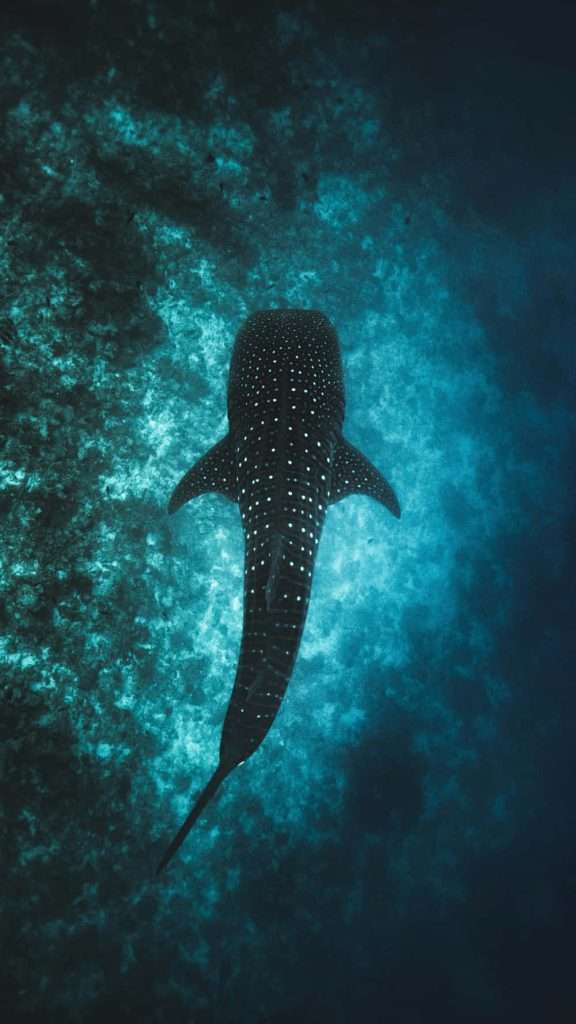
There is a practical reason behind some of the rules: whale sharks feed at or near the surface, so a snorkeller with fins is often better placed than a diver blowing bubbles twenty metres down. The scuba destinations are generally those where the animals pass a cleaning station, a seamount or a deep reef rather than a surface feeding aggregation.
- Mexico restricts Holbox and Isla Mujeres to snorkelling; scuba is not permitted with the aggregations.
- The Philippines limits Donsol to snorkelling by regulation.
- Australia runs Ningaloo on a licensed operator system with spotter aircraft and a capped number of swimmers in the water.
- Galápagos and Socorro are scuba destinations and neither is suitable for a first trip: strong current, blue water, no reference.
- Maldives, Utila, Mozambique and Belize let you meet them on scuba on a normal recreational dive.
The Americas
Mexico: Holbox, Isla Mujeres and La Paz
The Mexican Caribbean hosts one of the largest aggregations on the planet between June and September, when hundreds of animals feed at the surface off Holbox and Isla Mujeres. Tours are well regulated, boats are limited and the number of snorkellers in the water at once is capped. On the Pacific side, La Paz works roughly from October to May, with the bay closed through the summer.
Utila and Gladden Spit
Utila, in Honduras, is one of the few places with year-round sightings, peaking March to April and September to December; encounters are opportunistic, from a boat working the surface feeding events locally called boils. In Belize, Gladden Spit is a calendar event: around the full moon between April and June, snapper spawn in huge numbers and whale sharks arrive to feed on the eggs.
Galápagos
Darwin and Wolf, from June to November, are different in kind: large, often pregnant adults cruising past in blue water with serious current, reached only by liveaboard. Spectacular, and strictly for experienced divers.
Indian Ocean and Africa
Maldives: South Ari Atoll
South Ari is one of the few places where whale sharks are resident rather than seasonal, best from August to November. Most animals there are juveniles, and long-running research programmes have identified hundreds of individuals and logged thousands of encounters, making it one of the best-studied populations anywhere.
Africa and the Gulf of Tadjoura
Tofo, in southern Mozambique, is among the least crowded and most rewarding spots, roughly October to March, and doubles as a manta destination. Mafia Island in Tanzania runs over a similar window in shallow, plankton-rich water. Nosy Be, in Madagascar, works from September to December when the plankton arrives, and Djibouti has a short season around November to February with mostly juveniles.
Learn to dive with us
Get certified before the encounter
The SSI Open Water course takes three days in small groups and certifies you to dive anywhere in the world, big animals included.
Asia and the Pacific
Southeast Asia is where most travelling divers end up, and it has more options than the headline destinations suggest.
- Cenderawasih Bay, West Papua: whale sharks year-round, drawn to the lift nets of local fishing platforms — an old relationship rather than a tourist-driven one, but provisioning all the same.
- Ningaloo Reef, Western Australia: March to July, on a 260 km fringing reef right off the beach, with hundreds of coral and fish species alongside the sharks.
- Donsol, Philippines: completely natural encounters from November to June, peaking in February and May.
- Richelieu Rock, Thailand: a soft-coral pinnacle in the Andaman Sea with a season roughly October to May.
- Koh Tao, Thailand: not guaranteed, but whale sharks pass through Chumphon and Southwest Pinnacle most years, usually in the shoulder months.
The animal itself
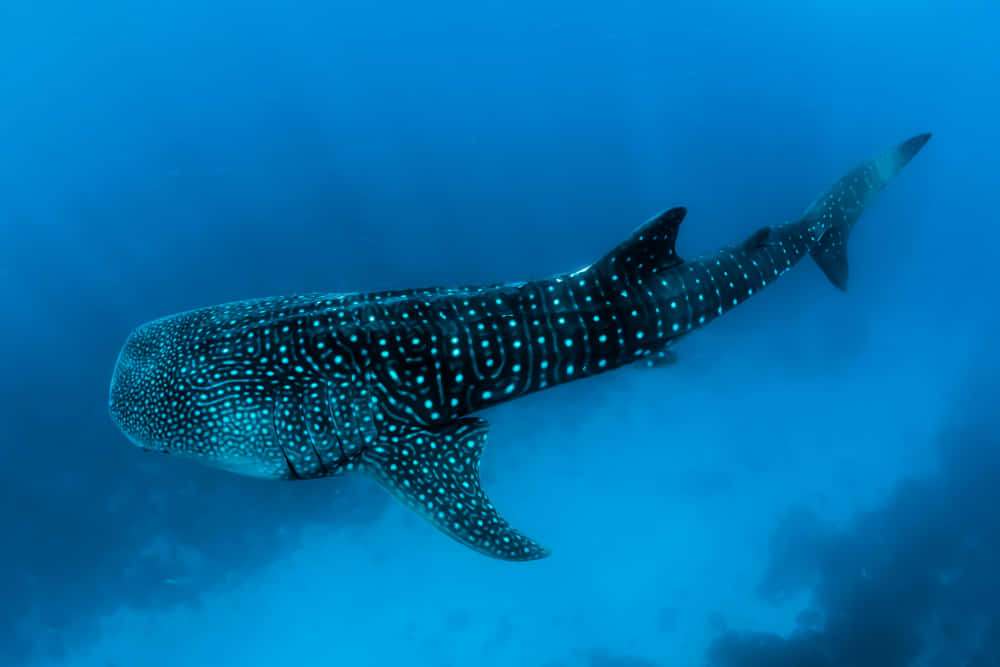
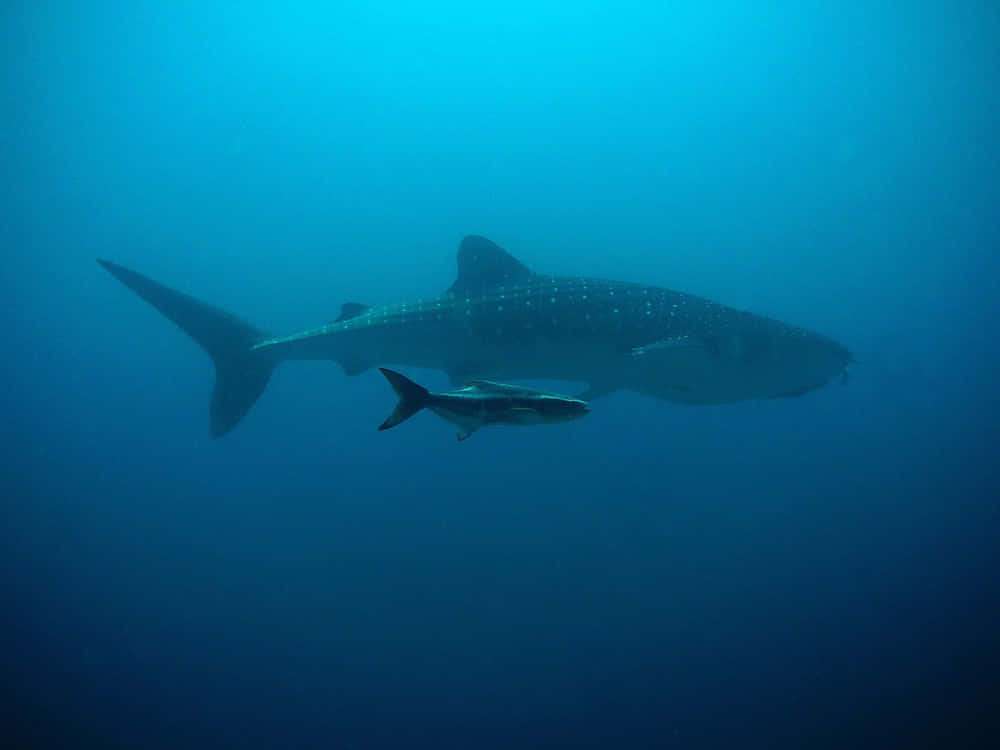
Rhincodon typus is the largest fish in the ocean, and it is a shark, not a whale. Adults commonly measure around 9 to 10 metres, with credible reports up to about 18 metres and weights in the region of twenty tonnes. They are filter feeders: plankton, krill, fish and coral eggs, small fish and squid, strained from the water as they swim, much like baleen whales.
They are listed as Endangered on the IUCN Red List, affected by fishing, bycatch and vessel strikes. Slow to mature and highly migratory, they cross entire ocean basins, which is what makes them hard to protect.
The pattern of white spots on a whale shark's flank is unique, like a fingerprint, and does not change over its life. Researchers use it to identify individuals, and collaborative databases let divers upload a clear shot of the left flank behind the gills so the encounter becomes a data point — the easiest conservation contribution you will ever make.
Is it safe, and how to behave in the water
Yes. Whale sharks have no interest in you and no equipment to hurt you with. The rules exist to protect them, not you. The most common cause of a bad encounter is not malice but excitement: ten people sprinting at the animal from the front. Enter the water calmly, swim parallel, and let it set the pace.
- Keep at least three metres from the body and more from the tail, which is powerful and moves in a wide arc.
- Never touch or ride one. Handling removes the mucus layer that protects it from infection.
- Do not block its path or chase it. Approach from the side, never head-on, and let it swim away when it wants to.
- No flash photography and no bright lights in the face.
- Use biodegradable, reef-safe sunscreen and apply it well before entering the water.
- Do not feed them and choose operators who do not.
The Oslob question
Oslob, in Cebu, guarantees sightings because fishermen hand-feed the sharks every morning. That is why it is on every list, and why it is the most criticised whale shark site in the world. Researchers raise consistent concerns: daily provisioning can change migration and feeding behaviour, concentrate animals in a small area with heavy boat traffic, and increase the risk of injury. Ask one question before booking anywhere — does this operator feed the animals?
Small things that make a better encounter
Bring gear that fits: a mask that does not leak and fins you can kick all day beat any camera. Move slowly, because splashing ends encounters. Be patient — most trips involve hours of looking. And put the camera down at some point and watch the animal; that is the part you will remember.
What level do you need, and how to get ready
Less than people assume. Snorkel-only sites such as Holbox, Isla Mujeres, Donsol and Ningaloo need no certification at all — just decent fitness and the ability to swim comfortably in open water.
For the scuba destinations, an entry-level certification covers you at Utila, Tofo, the Maldives and most of Southeast Asia. The SSI Open Water course takes three days in small groups and certifies you to dive anywhere in the world; it is the best preparation for a big-animal trip because it is the one that teaches you to be calm and neutral in the water. See the full range on our beginner courses page.
Galápagos, Socorro and Darwin are another matter: current-swept blue water dives where an Advanced Adventurer certification and real logged experience are the minimum most liveaboards accept.
Dive with us in Thailand and Indonesia
We run SSI schools at five sites across Thailand and Indonesia, and while no honest dive centre will promise you a whale shark, both countries put you in the right ocean. Koh Tao has a long history of sightings on its offshore pinnacles, and Nusa Penida is one of the best big-animal destinations in Asia. To read further, see our guides on where to dive in Indonesia and diving with manta rays at Manta Point.
Plan your dives
FAQ
Frequently asked questions
Where can you swim with whale sharks?
The twelve destinations covered here are Holbox and Isla Mujeres in Mexico, Utila, Gladden Spit in Belize, the Galápagos, Cenderawasih Bay in Indonesia, Ningaloo Reef, Oslob and Donsol in the Philippines, the Maldives, Mozambique and Madagascar.
Is it safe to swim with whale sharks?
Yes. Despite reaching up to 18 metres, they feed on plankton and small fish and are completely harmless to humans.
Which destinations work all year round?
Cenderawasih Bay in Indonesia and the South Ari Atoll in the Maldives have whale sharks year round, and Utila is a meeting point throughout the year.
What distance should you keep?
At least 3 metres, without touching or riding the animal, using biodegradable sunscreen and avoiding flashes or bright lights.
What do whale sharks eat?
Plankton, krill, fish and coral eggs, small fish and squid, which they filter from the water as they swim, much like baleen whales.