
Where to dive in Gili Trawangan means six sites you will hear named constantly: Shark Point, Manta Point, Halik Reef, Bounty Wreck, Turtle Heaven and Meno Wall. Depths run from 15 to over 30 metres, most dives are drifts from a boat, and the reef is shared with Gili Meno and Gili Air, so your boat may cross between islands on a single trip.
In short
Where to dive in Gili Trawangan means six main sites off the largest of the three Gilis, northwest of Lombok. Shark Point, at around 25 metres, is the best known: white-tip reef sharks, rays, moray eels and large schools of reef fish, with occasional currents, so previous experience helps. Manta Point, between Gili Trawangan and Gili Meno, is shallower at no more than 18 metres and is where you look for manta rays, turtles and parrotfish, most likely from April to November.
For easier dives, Bounty Wreck slopes gently to 20 metres over calm, shallow water with turtles, cuttlefish and tropical fish, and Turtle Heaven tops out at 15 metres and lives up to its name with green and hawksbill turtles, moray eels and pufferfish. Halik Reef works for every level, descending to 24 metres past clownfish, green turtles and hard and soft corals, and it is a fine night dive.
Meno Wall, also between Trawangan and Meno, is a vertical reef dropping more than 18 metres, where pygmy seahorses, frogfish and resting bamboo sharks hide in the crevices. The best season runs from May to October, when the sea is calmer and visibility can exceed 30 metres, but water temperatures rarely fall below 27 °C, so the island dives well all year.
Water temperature sits between 27 and 30 degrees all year and visibility can exceed 30 metres in the dry season. Around 25 sites are dived across the three islands, from shallow training reefs to deep pinnacles, plus one of the largest coral restoration projects in the world. Here is how they break down.
One reef system, three islands
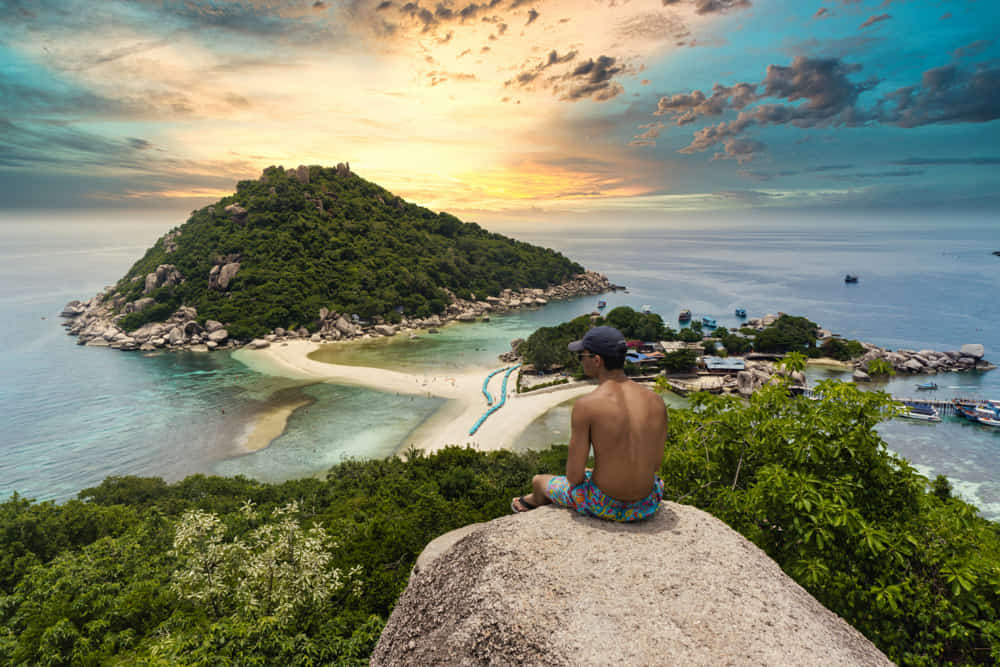
Gili Trawangan is the largest of the three Gilis, northwest of Lombok, but the dive sites are not divided by island. The seabed between Trawangan, Meno and Air is a continuous system of reefs, slopes, pinnacles and sandy channels, and a morning boat from Gili Trawangan will happily drop you on a site technically off Gili Meno. Beyond the fringing reef the ocean falls away steeply, which is why pelagic species pass close to shore.
The other thing to know before you book is that most Gili diving is drift diving from a boat. Currents run north to south and vary with the tide, so the guide chooses the site on the morning rather than the week before. That makes for relaxed, low-effort dives, but it also means a rigid plan rarely survives contact with the tide table.

The classic sites
Three names come up in every conversation about diving here, and between them they cover sharks, mantas and the best all-round reef.
Shark Point
The best known site off Gili Trawangan and the most demanding. It is built of deep ridges and a drop-off, commonly dived around 25 metres but continuing far deeper, with a small tug boat wreck on the sand near 30 metres. White-tip reef sharks are the headline, along with rays, moray eels, schooling jacks and a heavy concentration of turtles in the shallower sections. Depth and occasional current make previous experience genuinely useful. Visibility is usually best in the morning.
Manta Point
Shallower, no deeper than about 18 metres, and the site you dive when you want manta rays. It also holds turtles, parrotfish, staghorn and soft corals, and it is easy enough for newly certified divers. Manta sightings are most often reported between April and November, though some operators associate them with the plankton-rich rainy months, so treat any stated season as a probability rather than a promise.
Halik Reef
The best all-rounder on the northwest side of Gili Trawangan. It starts at around 6 metres with barrel sponges and gorgonian sea fans and slopes down past 24 metres into coral ridges and canyons, so the same site works for a newly certified diver and for someone on nitrox going deeper. Clownfish, green turtles, and bumphead parrotfish that come through around the full moon. It is also one of the better night dives on the island.

Easy sites for first dives
If you are just certified, or doing your open water dives, these are the sites you will be taken to. Shallow, calm, and dense with life.
- Bounty Wreck (9-20 m): a sunken pontoon pier that went down in 2003 and is now covered in hard and soft coral. Clouds of glassfish, turtles, cuttlefish and a strong macro scene. Calm and shallow; best early in the morning for visibility.
- Turtle Heaven (from about 10 m, maximum around 15 m on the shallow side): exactly what the name promises, green and hawksbill turtles in numbers, plus moray eels and pufferfish. Sits off the northeast of Gili Meno.
- Shallow Turbo: a gentle drift over coral restoration structures with turtles and schooling reef fish, one of the most forgiving dives in the Gilis.
- Sunset Reef (to around 18 m): a gradually sloping reef off the southwest of Gili Trawangan, suitable for all levels, with a cleaning station that occasionally attracts larger visitors.
Dive with us in Gili Trawangan
Turtle Heaven is a fifteen-minute boat ride away
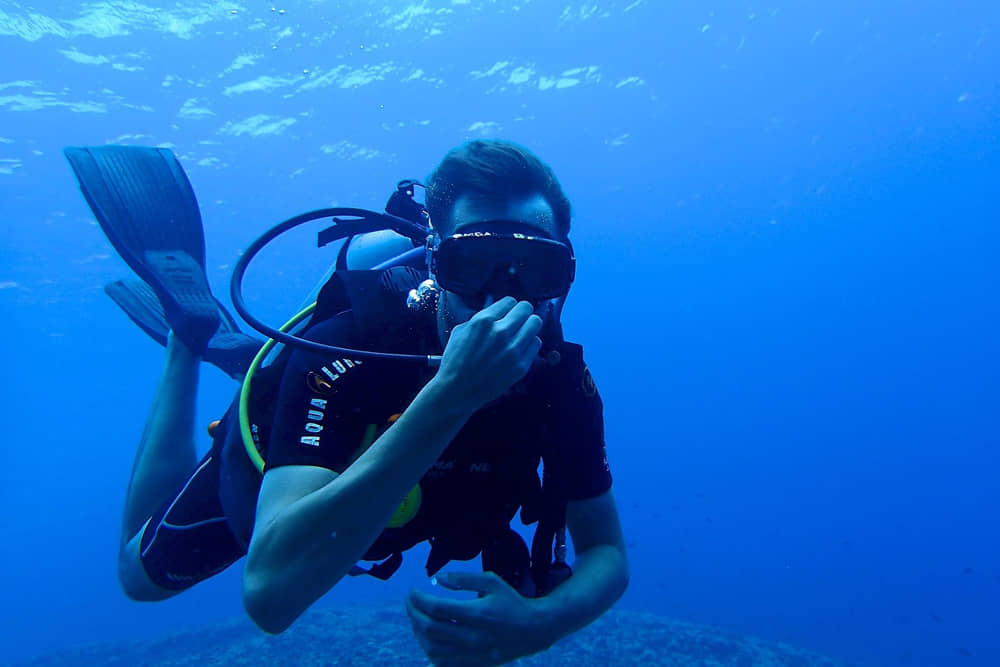
Our SSI school on the island runs the Open Water course in three days and the Try Scuba in one, with small groups and instructors who know every one of these sites.
Turtles: where and why so many
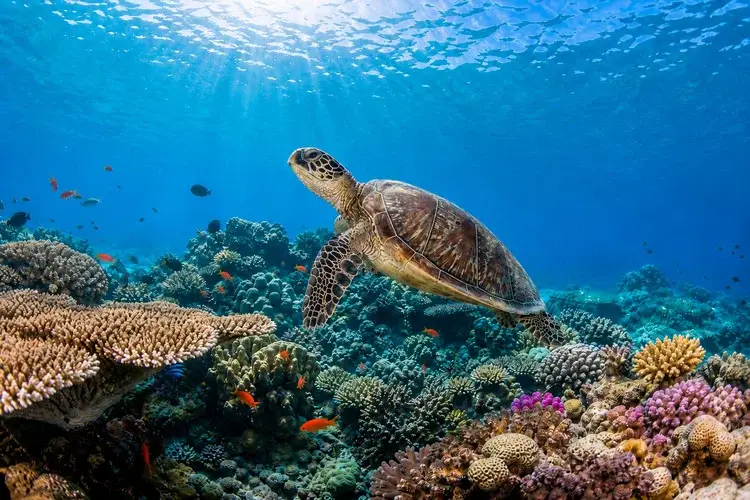
The Gilis are sometimes called the turtle capital of the world, and the claim is not marketing. Green and hawksbill turtles are resident rather than passing, and on a normal dive at Turtle Heaven, Halik Reef or Shark Point you will see several without looking for them.
The reason is a combination of protected shallow reef, abundant seagrass and sponge, and a local hatchery culture that has been releasing juveniles for years. What it means for a diver is that turtles here behave differently from turtles elsewhere: they are largely indifferent to divers, which makes them easy to observe and easy to crowd. Stay low, stay off the coral, and never block a turtle's route to the surface.
Deeper and more demanding dives
Beyond the classic circuit, several sites reward an Advanced certification and good gas management. Deep Turbo is a series of sea mounds north of Gili Trawangan, dropped into from open water and dived from around 16 to 30 metres among enormous coral pinnacles, gorgonian fans, turtles and reef sharks; nitrox is worth having. Simon's Reef, further north, is a field of canyons and massive coral bommies for experienced divers.
Meno Wall, between Trawangan and Meno, is a vertical reef dropping past 18 metres and reaching about 30, where pygmy seahorses, frogfish and bamboo sharks resting in the crevices reward a slow, close look. Currents there can be strong and variable, and it is one of the island's best night dives. Hidden Reef, east of Gili Meno at 12 to 35 metres, is a pure drift along a coral garden with a north-to-south current.
Macro and muck diving
The Gilis have a quiet second reputation among macro photographers. Hans Reef, a patch reef over sand off Gili Air, is the best known: garden eels, harlequin shrimp, frogfish, ghost pipefish and nudibranchs on a bottom that looks like nothing until you slow down. Secret Garden and Mirko's Reef are the same idea over rubble slopes, and the harbours and bays on the Lombok coast are genuine muck sites with rhinopias, leaf fish and juvenile everything.
These dives are shallow, currentless and unhurried, which makes them ideal for a third dive of the day or for anyone who has tired of looking into the blue. If macro is your thing, Gili Air is worth a day: see our guide to where to dive in Gili Air.
Biorock and coral restoration
Scattered across the shallows of all three islands are more than a hundred metal structures carrying a low electrical current, which accelerates the growth of coral transplanted onto them. It is one of the largest installations of its kind in the world, and several of them have become dive sites in their own right, colonised by coral and taken over by reef fish.
They are shallow enough to snorkel, which makes them a good non-diving afternoon, and they are also used as training sites because the structures give you something to swim around while you work on buoyancy. If you want to go further with the conservation angle, that is what our Indonesian schools build their ecology programmes around.
Night dives
Night diving in the Gilis is easy: the shallow sites are calm after dark and the boat ride is short. Meno Wall, Halik Reef and Hans Reef are the regulars. What changes at night is the cast rather than the site: Spanish dancers, hunting moray eels, sleeping parrotfish wrapped in mucus, and crustaceans that spend the day hidden in the coral.
Because currents shift with the tide, night dives are scheduled around slack water, so ask at the shop rather than assuming a fixed time.
When to dive and how to plan it
The best conditions run from May to October, during the dry season, when the sea is calmest and visibility can pass 30 metres. But the Gilis dive well all year: water temperature rarely drops below 27 degrees and rain tends to arrive in short bursts rather than settling in for days. March to October is the most reliable stretch overall.
Two or three days gives you the classic circuit. A week lets you add the deeper sites and the macro dives, and is long enough to certify from scratch: the Open Water course takes three days and the Advanced Adventurer course two more, which is what you need for Deep Turbo and the deeper half of Shark Point. Our dive school on Gili Trawangan dives these sites daily.
For the journey itself, see how to get from Bali to the Gili Islands.
Plan your dives
FAQ
Frequently asked questions
When is the best time to dive in Gili Trawangan?
From May to October, during the dry season, when the sea is calmer and visibility can exceed 30 metres. Diving is possible all year round.
What is the water temperature in Gili Trawangan?
It rarely drops below 27 °C, so you can dive comfortably at any time of year.
Where can I see manta rays in Gili Trawangan?
At Manta Point, between Gili Trawangan and Gili Meno, mainly between April and November.
Which dive sites suit beginners?
Bounty Wreck and Turtle Heaven, both shallow and calm, and Halik Reef, which works for divers of all levels.
Where am I most likely to see turtles?
At Turtle Heaven, a 15-metre site full of green and hawksbill turtles, and at Halik Reef, home to green turtles.