

Where to dive in Phi Phi comes down to three rings of sites. Around Koh Phi Phi Ley, five to twenty-five minutes from Tonsai, sit the shallow reefs and walls that suit every level. The Bida islands, at the southern end of the chain, hold the headline dives. And further out lie the wrecks and the advanced day trips to Hin Daeng and Hin Muang.
In short
Where to dive in Phi Phi comes down to seven sites in the Andaman Sea. Bida Nok is the headline act: a submerged pinnacle with reef sharks, barracuda, giant grouper and, with luck, leopard sharks, best suited to intermediate and advanced divers because of the occasional current. Bida Nai, right next door, is a gentler dive with turtles, moray eels, schools of colourful fish and unique coral formations.
Beginners have Maya Bay, shallow and calm, with blacktip sharks, turtles and tropical fish, and Anemone Reef, a reef carpeted in anemones and clownfish with excellent visibility. Shark Point, at 18-24 metres, adds close encounters with reef sharks, rays and lionfish among soft corals and sea fans, and suits divers with some experience.
The two advanced sites lie further out: Hin Daeng, with dramatic topography, stronger currents and the chance of manta rays and whale sharks, and Hin Muang, the 'purple reef', one of the deepest in Phi Phi, known for its sponge-covered walls and big pelagics. Visibility across the archipelago runs from 15 to 30 metres, and the best window is November to April, during the dry season.
Visibility across the archipelago runs from 15 to 30 metres, the water hovers near 29 degrees all year, and the best window is November to April during the dry season. This guide runs through the sites by level and by how far you have to travel to reach them.
Why Phi Phi works for every level
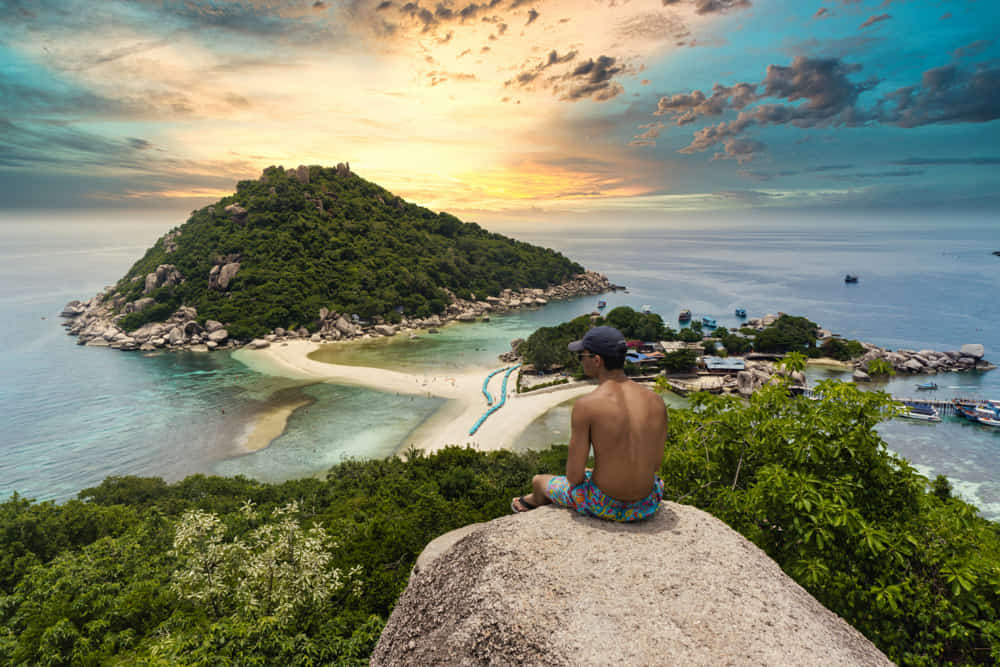
The limestone karsts that make Phi Phi famous above water continue below it as walls, pinnacles, canyons and swim-throughs. That gives you shallow coral gardens at 5 metres and vertical drop-offs in the same bay, which is why a beginner and an advanced diver can dive the same site on the same boat and both get what they came for.
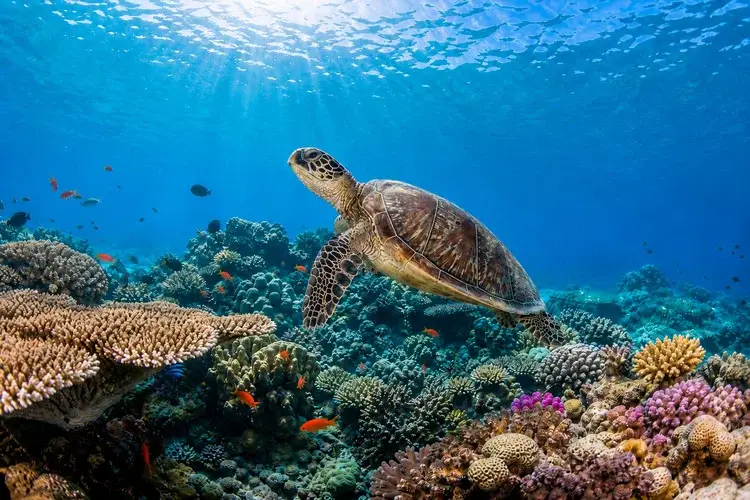
The other advantage is distance. Most sites are a 5 to 25 minute boat ride from Tonsai, so a standard two-tank morning gets you back for lunch. Marine life is the usual Andaman cast: blacktip and whitetip reef sharks, leopard sharks, hawksbill turtles, moray eels, barracuda, schooling fusiliers and a strong macro scene of nudibranchs, seahorses and ghost pipefish.

The Bida islands: the headline dives
Two limestone islets off the southern tip of the chain, roughly 25 minutes from Tonsai, and consistently the best diving in the archipelago.
Bida Nok
The bigger of the two and the site everyone remembers: walls dropping from shallow reef to around 24 to 28 metres, festooned with soft corals and sponges. Reef sharks patrol the shallows, giant grouper hold in the cuts, barracuda school off the point and leopard sharks rest on the sand, most often on the eastern side. Occasional current pushes it into intermediate to advanced territory, though the shallow sections are diveable by anyone.
Bida Nai
Right next door and gentler, typically dived between 8 and 20 metres. There is an archway on the northern side, coral formations you do not see elsewhere in Phi Phi, and a reliable cast of turtles, moray eels, clownfish, sea snakes and schooling snapper. It is the better of the two for a first deeper dive, and it can also pick up mild current.

Shallow reefs and walls close to Tonsai
These are the sites that make Phi Phi easy to dive: short boat rides, shallow profiles and long bottom times, which is exactly what you want for training dives, second dives of the day or a relaxed afternoon.
- Loh Samah Bay (2-12 m, 20 min): hard coral garden inside a limestone bay, with anemones, seahorses and sea whips. One of the best night dives in Phi Phi.
- Palong Wall (shallow to around 18 m, 20 min): the most consistent place to see blacktip reef sharks cruising the shallows.
- Viking (5-12 m, 15 min): coral nursery and artificial reef structures, with lionfish, anemonefish and turtles. Works well in low season when other sites are exposed.
- Monkey Beach and Tonsai Wall (5-18 m, 5 min): the closest sites to the pier, dived all year, good for moray eels, cuttlefish and seahorses, and both work after dark.
- Malong and Camel Rock (3-20 m, 20 min): hawksbill turtles, table corals, nudibranchs and swim-throughs.

Dive with us in Koh Phi Phi
Bida Nok is worth the certification
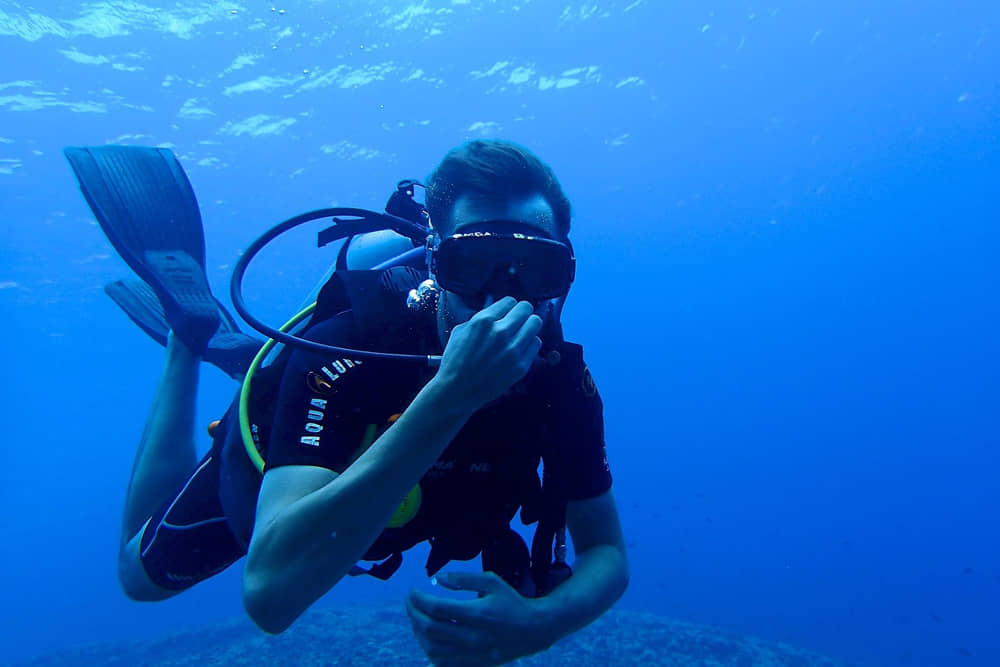
At our SSI school in Koh Phi Phi you can try scuba diving in a single day or complete the Open Water course in three, always with small groups and local instructors.
Where to see sharks
Sharks are the single most common reason people book a dive in Phi Phi, and three species turn up regularly. Blacktip reef sharks live in the shallows at Palong Wall, Maya Bay and Coral City, and they are skittish rather than curious, so the trick is to stay low and still rather than chase. Whitetip reef sharks show up around the Bida islands.
Leopard sharks are the prize. They rest motionless on sandy patches at Bida Nok, Hin Bida, Pileh Wall and Camel Rock, and sightings are best between November and April. At Shark Point, a separate site at 18 to 24 metres reached from Phi Phi or Phuket, reef sharks share the soft corals and sea fans with rays and lionfish. It suits divers with some experience.
Wreck diving: King Cruiser and Kled Gaeow
The King Cruiser was a car ferry running between Phuket and Phi Phi until it struck Anemone Reef and sank in 1997. It now lies between roughly 16 and 32 metres and is rated among the best wreck dives in Asia. The structure has degraded and penetration is no longer permitted, but the superstructure is covered in soft coral and attracts octopus, cuttlefish and huge schools of fish. Current can be strong and the site is advanced only, usually combined with Shark Point or Anemone Reef in the same trip.
The Kled Gaeow, a former Thai Navy vessel sunk as an artificial reef, sits at around 14 to 27 metres and is the more accessible of the two, though still an Advanced dive. It is exposed, so trips run when wind and current allow. Both are a natural target after the Advanced Adventurer course.
The advanced day trips: Hin Daeng, Hin Muang and Koh Haa
Hin Daeng, the red rock, and Hin Muang, the purple reef, are the two most celebrated dives reachable from Phi Phi and also the hardest to get to: two to five hours of navigation each way, so they are sold as full-day or liveaboard trips and they only run from November to April.
Hin Muang is a submerged ridge whose walls drop past 60 metres, covered in the purple soft corals that give it its name; Hin Daeng breaks the surface and falls away just as steeply. Both are exposed to open-ocean current, both are advanced-only, and both are where manta rays and whale sharks are most likely in the Andaman. Koh Haa, on the same run, is gentler: a group of islands with a cathedral-like cavern and an air pocket, diveable from 6 to 16 metres for most levels.
Anemone Reef deserves its own mention. Shallow enough for any level, blanketed in anemones and clownfish, with excellent visibility, and the reef the King Cruiser hit on its way down.
Best time to dive in Phi Phi
Diving runs all year, but the calendar is not flat. November to April is the dry season: calm water, the best visibility of the year, and the only window for the far sites. May to October brings more unpredictable conditions with stronger currents and lower visibility, though most days still dive well because centres simply move to sheltered sites such as Viking, Coral City and the bays near Tonsai instead of cancelling.
Water temperature sits around 29 degrees year-round, so a 3 mm suit is plenty. There is a marine park fee to pay on top of your dives inside the national park, and it is higher for the Hin Daeng and Hin Muang trips.
Choosing sites by level
If you are new or still in training, build your week around Maya Bay, Anemone Reef, Viking, Monkey Beach, Tonsai Wall and Bida Nai: shallow, calm, and rich enough that you will not feel short-changed. If you hold an Open Water certification, add Loh Samah, Palong, Malong and the upper sections of Bida Nok.
With an Advanced certification the picture changes: the King Cruiser, Kled Gaeow, Shark Point and the deeper walls at Bida Nok open up, and the Hin Daeng day trip becomes possible in season. From zero, the Open Water course takes three days, which is enough time on Phi Phi to be certified and still dive the Bidas before you leave.
For the practical side, see our dive school in Koh Phi Phi, the overview of diving in Thailand and our guide on how to get from Krabi to Phi Phi.
Plan your dives
FAQ
Frequently asked questions
When is the best time to dive in Phi Phi?
November to April, during the dry season, when the water is calmer and visibility is at its best. Diving is possible all year, although May to October brings more unpredictable conditions.
What visibility can I expect in Phi Phi?
Usually between 15 and 30 metres, depending on the time of year.
Which dive sites in Phi Phi are good for beginners?
Maya Bay and Anemone Reef, both shallow and easy, plus Bida Nai, which is a beginner to intermediate dive.
Where can I see sharks in Phi Phi?
Blacktip sharks at Maya Bay, reef sharks at Shark Point and Bida Nok, and leopard sharks at Bida Nok if you are lucky.
Which are the most demanding dive sites in Phi Phi?
Hin Daeng and Hin Muang: remote, deep and with stronger currents, so they are reserved for experienced divers.